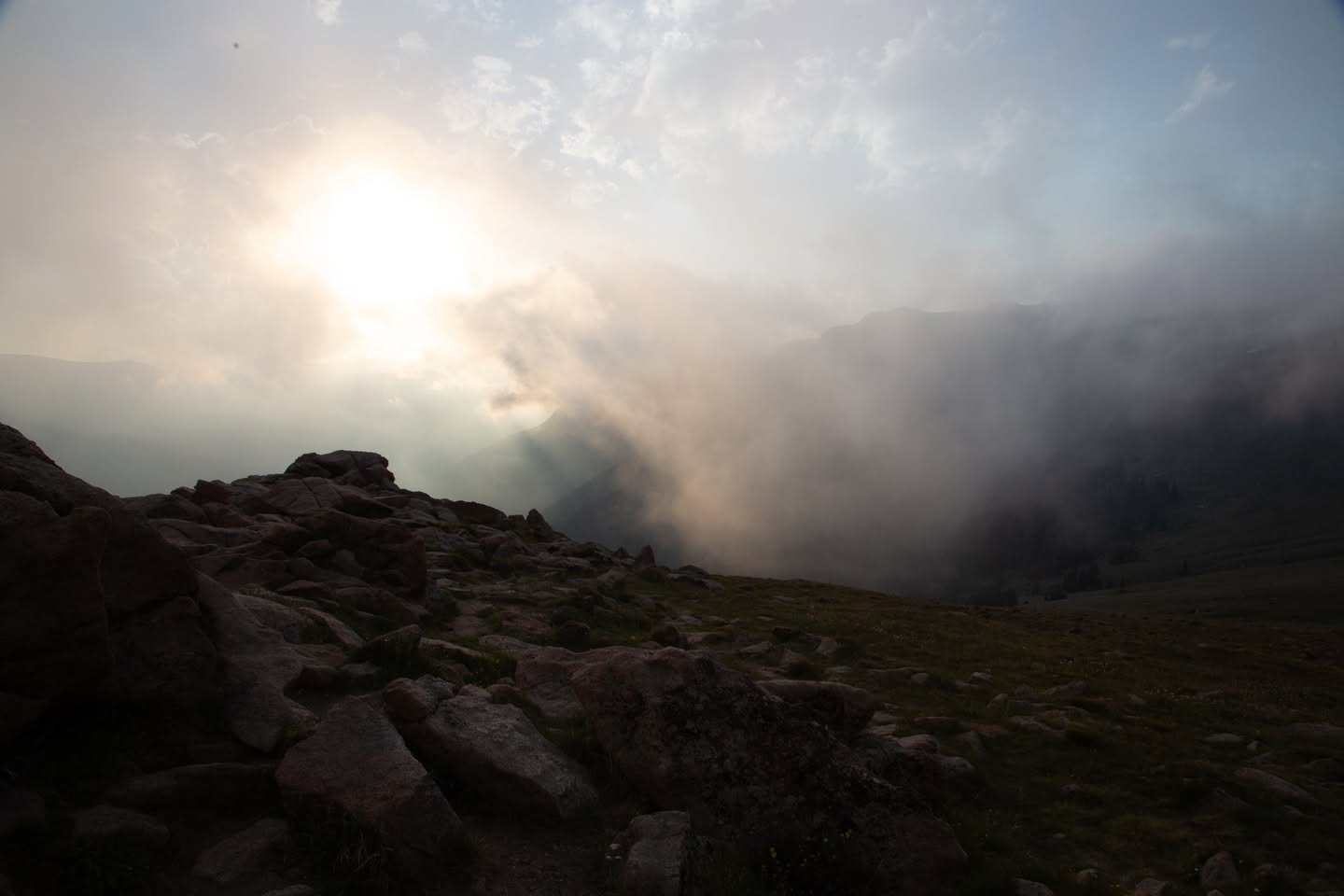
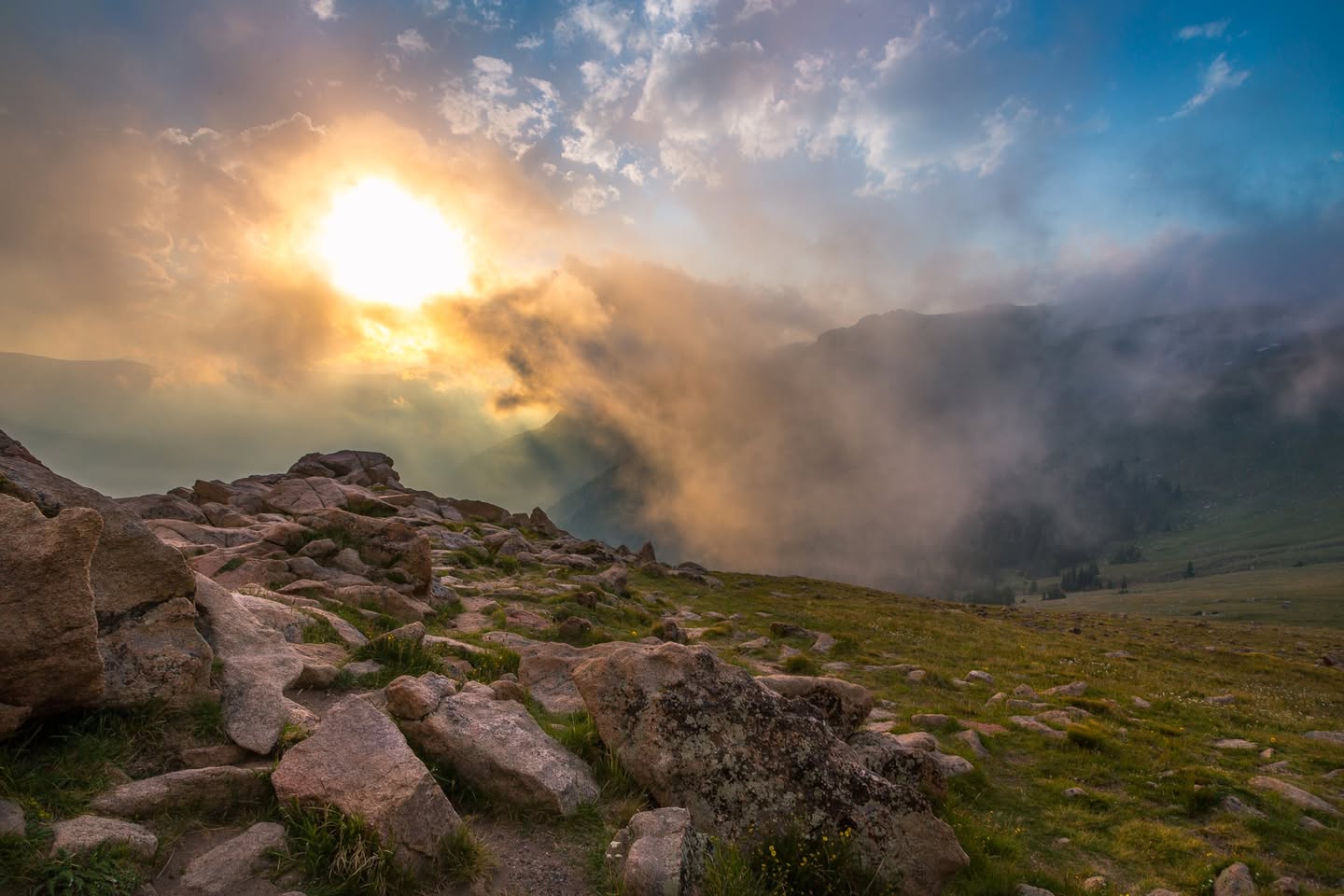
I've been spending a lot of time lately thinking about my photography — what I've accomplished, the images and places I've been lucky enough to capture, and where I want to take this work going forward. And I keep coming back to one photo. One moment, really. The spark that brought me back to photography and lit a fire that hasn't gone out since.
Every photo has a story. This one is the most important story I have.
It was 2016. I'd been through some significant life changes — the kind that make you stop and take stock of who you are and what you actually want. As I was coming out the other side and beginning to rewrite my story, I decided I needed to do something just for me. I planned a solo trip. I needed to get lost and find myself — a phrase that has meant so much to me that I eventually had it tattooed on my body.
I chose Rocky Mountain National Park. A week, alone, in the mountains. It was the first of what would become many trips to wild places across this country, and the destination that first made me understand what I was chasing. I've been back to the American West over and over since, always looking for that same feeling.
At the time, I was just getting back into photography. I'd done a lot of it in college — art degree, heavy photography focus — and shoots were a regular part of my work life even if I wasn't always the one behind the lens. I had just started a new job and was doing more actual shooting again. I had also recently started dating a wonderful woman who, for reasons I still don't fully understand, trusted me enough to lend me her camera for the trip. Maybe not her smartest call. But I brought it back in one piece. Thanks, Kate Rutt. This is entirely your fault.
I spent that week exploring the park without much of a plan — just moving, looking, shooting. One afternoon I drove up Trail Ridge Road toward the Alpine Visitor Center, one of the highest paved roads in the country. At nearly 12,000 feet above sea level, I pulled off at one of the scenic overlooks and stepped out of the car.
The sun was breaking through the clouds and fog in a way that stopped me cold. I don't have a better word for it than metaphoric — light pushing through the gray, illuminating what was underneath. I stood there and shot a handful of frames with different settings, honestly not sure what I was doing, just trying to capture what my eyes were seeing.
I had no idea what I actually had until I got home and opened the files.
Seeing the beauty in real life, then being disappointed by the straight-out-of-camera image, then being completely awestruck by what came out in the edit — that felt like magic. I was hooked.
That's the thing about photography that I don't think gets talked about enough: it's part composition, part light, part vision, part luck — but it's also a big part knowing how to edit, and more importantly, how to shoot for the edit. How to capture what's actually in the scene so you have something to work with later. You can stand in the most stunning place on earth, and if your settings are wrong or you don't understand what the file needs to become, the result won't match what you saw.
In this case, it was a happy accident. I didn't fully know what I was doing. But pulling the detail and information out of that raw file — watching the image become what I had actually seen — cracked something open. That was the a-ha. Shoot with intention for the final image, not the preview.
I've been chasing that feeling ever since, and honing the skills to create it on purpose rather than stumbling into it. It's a never-ending path of learning. I don't think it ever stops, and honestly I hope it doesn't.
The two images above are that photo — the edit, and the raw file straight out of camera. I'm sure I could re-edit it now and get a better result. My skills have improved. The software is vastly better. But this one feels sacred. I'm leaving it exactly as it is.
It's not the best photo I've ever taken. It might be the most important one.