I've been dreaming about photographing the northern lights for as long as I can remember. Photos, videos, timelapses of the aurora dancing on the horizon — brilliant colors, something that looked almost too beautiful to be real. For a long time, I assumed it was the kind of thing that required a plane ticket to Iceland and a week of planning.
I got a taste of it once, years ago. A trip to Alaska, near Denali — I was outside late at night and noticed a faint smear of color low in the sky. At the time I was still in the early years of shooting, without the knowledge or the gear to do anything meaningful with it. I filed it away. Someday.
Fast forward to 2024. Social media had changed the way aurora events traveled through the world — photography pages, weather accounts, and space weather nerds alike were tracking solar activity and broadcasting alerts whenever conditions spiked. I started paying attention. I followed a few pages, watched some videos on settings and technique, and started checking the apps. The problem was, I still wasn't sure we'd ever see real aurora activity from the mid-latitudes. We're not exactly Iceland down here in Maryland.
A year earlier, I had missed what turned out to be a spectacular event — a large solar flare that pushed visible aurora down to unusual latitudes. The weather had other plans for my area. Cloud cover. I watched everyone else post stunning images and felt that particular gut-punch of a missed opportunity. The kind that makes you think: that's never happening again in my lifetime.
I was wrong about that.
We were approaching solar maximum — the peak of the sun's roughly eleven-year activity cycle. Flares were getting stronger and more frequent. On October 11th, 2024, the alerts started firing. Extremely strong solar activity. High probability of aurora at mid-latitudes. I'd been watching the forecasts for days, checking cloud cover obsessively, willing the weather to cooperate.
That evening, I packed my gear, said goodbye to the family, and planned to drive about thirty minutes to a dark field I'd scouted. I was expecting faint color — the kind that's invisible to the naked eye but shows up on a longer exposure. A hint of green low on the horizon, maybe. Something.
I walked out the front door and stopped.
I shouted inside for the family to come out. Then I threw my gear in the truck and drove. Fast. Watching the color in my peripheral vision, debating the entire way whether I should pull over right now or stick to the plan and get to the spot. I stuck to the plan. The color started fading as I drove, and I cursed the whole way there — quietly, and then not so quietly.
I arrived. Set up quickly. Shot some test frames, dialed in composition, captured a few images of faint residual color. Then it faded almost completely. I sat in the dark with every aurora app open, watching the numbers, watching my phone light up with iPhone snapshots from friends who had just stepped outside their houses and pointed at the sky. The gut-punch feeling came back.
But I waited.
The numbers started trending the right direction. Then a notification came in from a friend: it's starting again.
I had two cameras with me. On instinct, I set both up as timelapses, hit the shutters, and waited — impatiently, in the dark, hands already getting cold.
Then it happened.
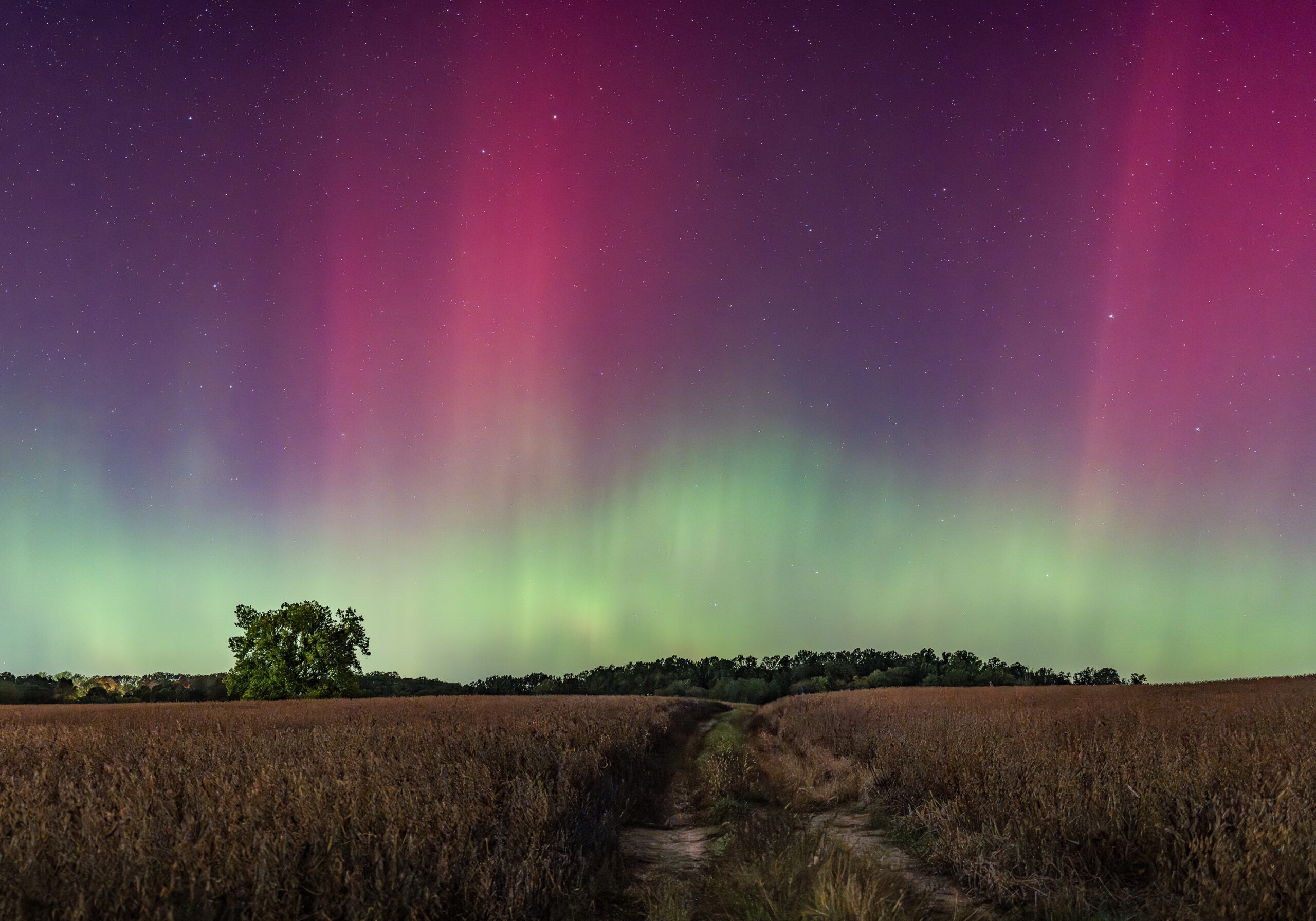
I'm not sure I have the right words for the next thirty minutes. Pinks, greens, purples, blues — not blended into one muddy color but distinct, moving, alive. Pillars and columns of light. At moments it was moving fast enough that I could track it with the naked eye in real time. I've stood in some incredible places with a camera. This was different. This felt like standing inside something.
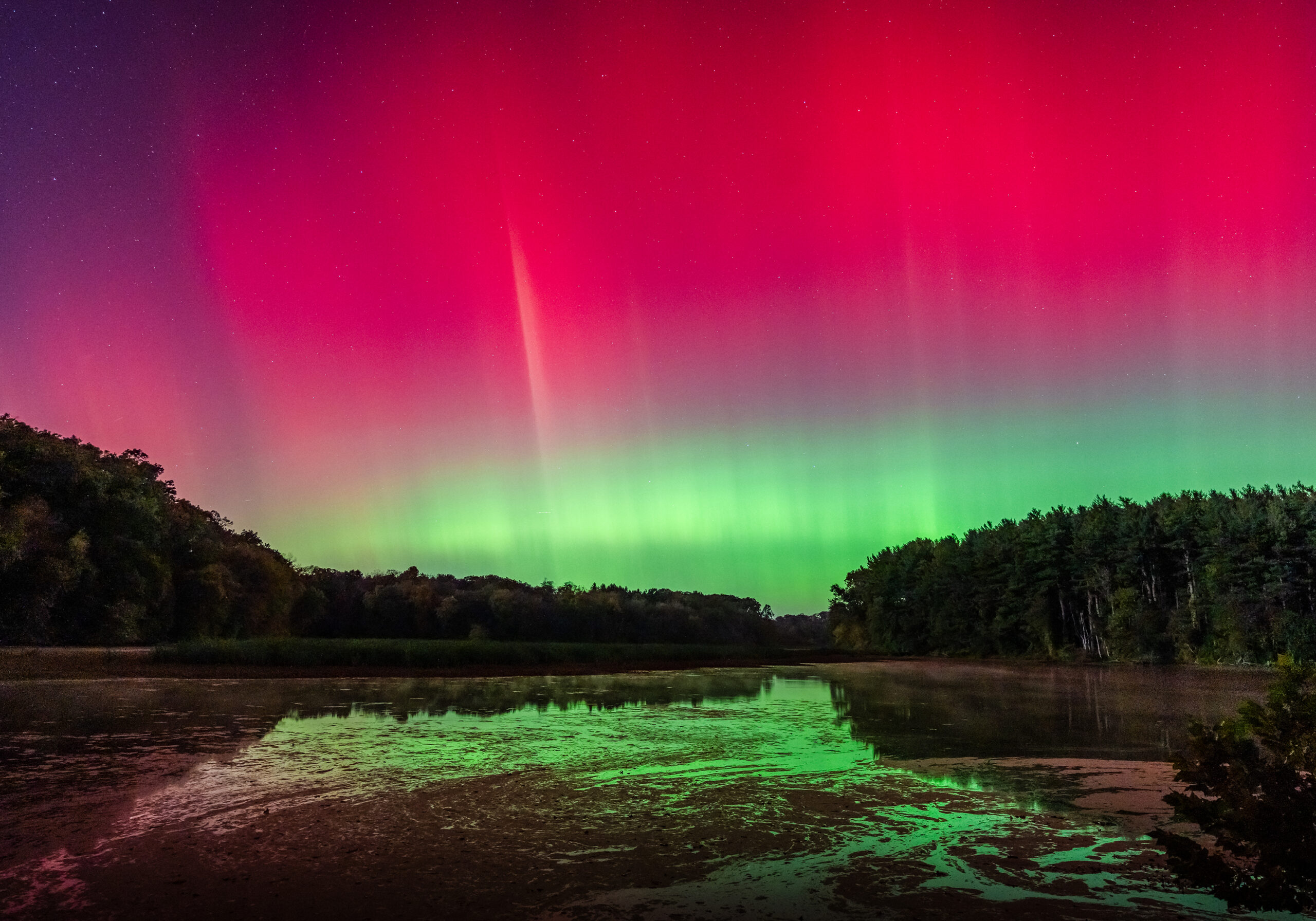
SONY A7IV • Sony 16-35 GM @ 24mm • f/2.8 • ISO 2000 • 3 sec • Edit in Lightroom
I let the timelapses run until my hands stopped cooperating. Then I drove home grinning, went straight to the computer, and spent the next couple of hours importing, editing, and exporting — building a timelapse from hundreds of raw files. By the time I had something I was happy with, it was late. I was cold, tired, done.
I checked Facebook one more time. A substorm had just kicked off. The lights were back.
I grabbed my gear and drove five minutes to a field near home. Set up a second timelapse. Sat in my car this time, warm, watching the camera do its thing while the aurora danced outside. Two shoots in one night. Two timelapses. Some of my favorite images I've ever made — from Maryland, on a random Friday night.
It still blows my mind.